
5 Tips for Communicating Technical Work to Any Audience

A few weeks ago, I had the opportunity to judge a Young Professionals Poster Competition at the PNWS-AWWA 2026 Conference. When I was first asked, my initial feeling was hesitation. I've worked in the water industry for over a decade, but my background is in water distribution pipe design, not the highly specialized areas like water treatment that these posters typically cover. I didn't feel technical enough to judge.
But I quickly reminded myself that I didn't have to be an expert in everything to provide good feedback. Isn't that one of the most important parts of entering the industry? Learning to communicate your work to people who are in it every day, across many different specialties? That is exactly what I am building toward with Oxsen Learning. I happily accepted.
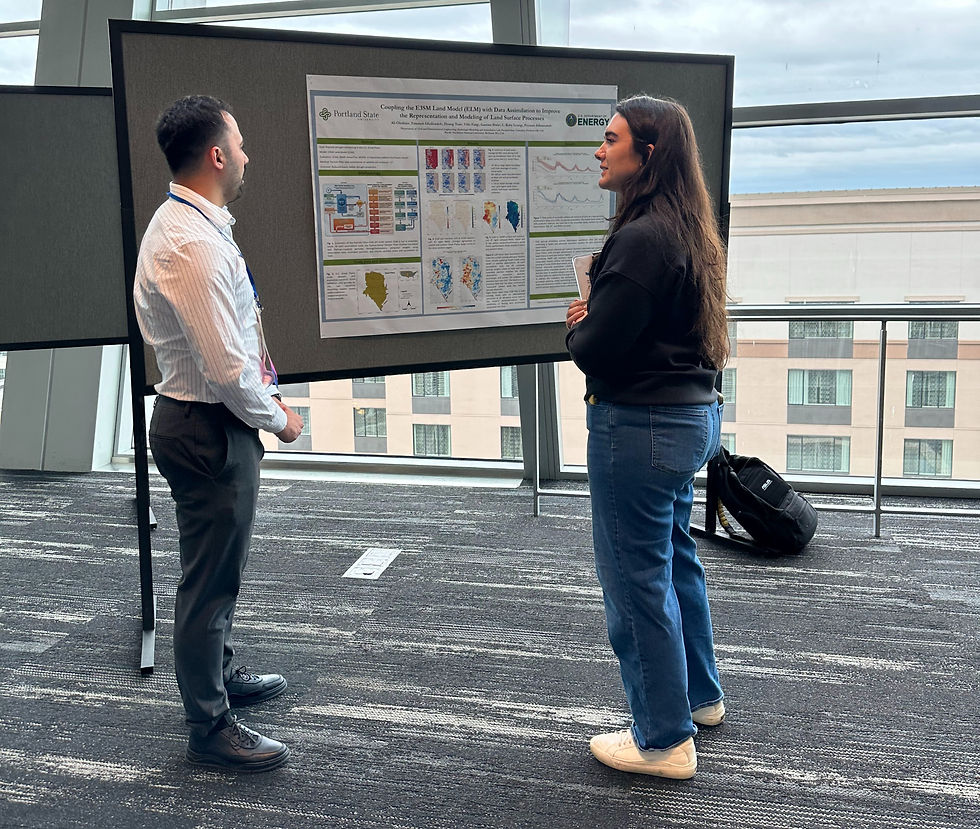
When we transition from school to the working world, we don't always get enough practice communicating our work to different audiences. The real world asks us to explain complex work to people with very different backgrounds, including people who have no idea what we do. Here are five technical communication tips to help with that, whether you're presenting research, leading a meeting, writing an email, or walking someone through a project update.
1. Introduce yourself with context
Before any other information is presented, people need to know who you are and why you're there. Not just your name and job title, but enough context to help them place you. What's your role on the project? What's your connection to this meeting or presentation topic? Why are you the one talking about this?
This sounds simple, but it's sometimes skipped. Or too little context is given for people to understand what you know. Give them the context upfront and they can focus on what you say next.
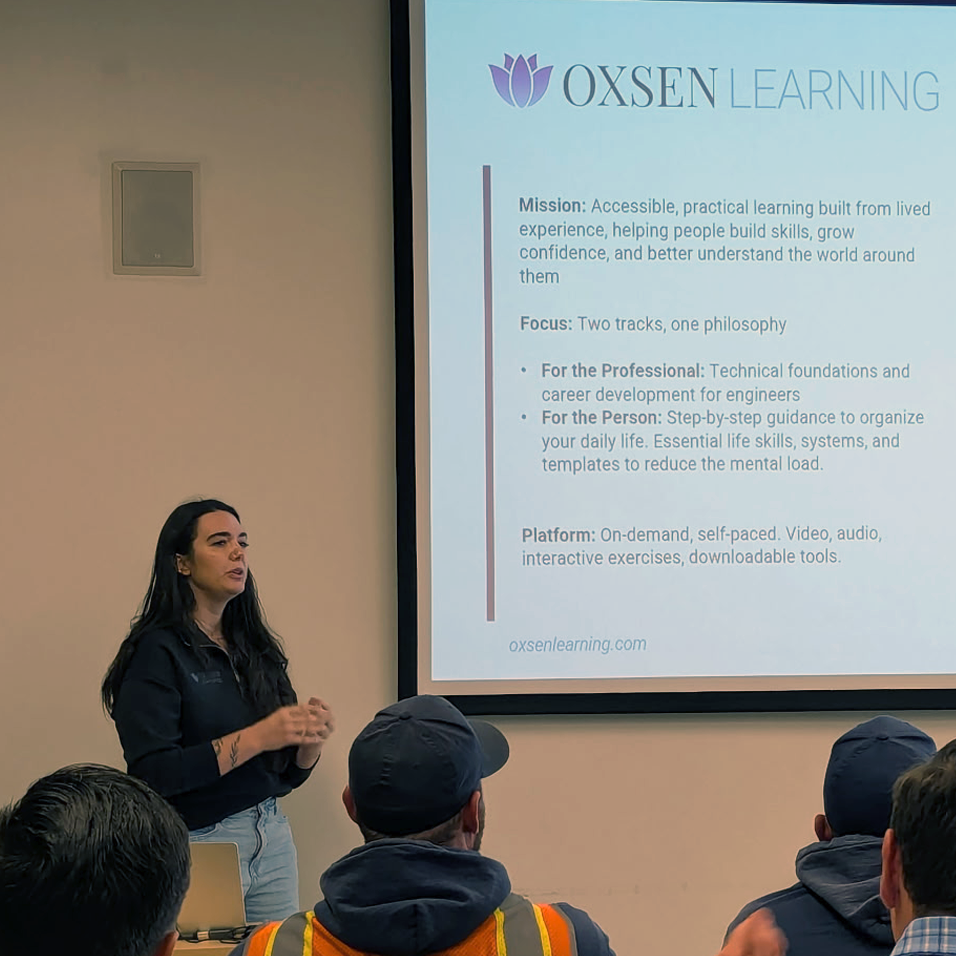
Example: "Hi everyone, I'm Laura Oxsen, Founder of Oxsen Learning. I am a Civil Engineer by trade and have transitioned my career to focus on Learning & Development. I love working with young engineers and industry leaders to help bridge the education and experience gap we are facing."
2. Set the purpose
We all love a good agenda or meeting overview (at least I do!). Sometimes though, we can rely too heavily on reading off some heading titles and call it good. Is there a way we can make the purpose more meaningful?
Try focusing on the goal or outcomes that should happen from the meeting. We want to frame things so people know what we are spending our time on. Not just reading a list of updates that could have been an email.
Example: "We are here today to talk about communicating technical work to any audience. By the end of this, my goal is for you to walk away with five areas you can focus on to improve your next meeting or presentation."
3. Start with the basics before diving into the details
When you're deep in your work, it's easy to forget that not everyone is starting from the same place you are. We are often around similar minds, so we start using a lot of acronyms and talking through complex topics without thinking twice.
Before you get into the technical details, take a moment to orient your audience. People who already know the basics won't mind the reminder. It's usually a quick confirmation that they're in the right place. And people who are less familiar will be grateful you did. If you skip straight to the complex stuff, you risk losing people before you even get to your main point. Start broad, get everyone moving in the same direction, then layer in the detail.
Example: "Students in college have many opportunities to practice communication. But how does that translate in practice? The AEC (Architecture, Construction & Engineering) industry requires lots of inter-discipline meetings, public outreach, commissioner presentations, internal communications, and more. The way we communicate has to constantly adapt to our audience's knowledge. This skill is not one size fits all. There are many soft skills to hone and adjustments to make along the way."
4. Be confident about what you don't know
At some point, someone is going to ask you a question you can't answer. And that's okay. What matters is how you handle it.
There's a lot of pressure in technical fields to have all the answers. But that's not realistic, and pretending otherwise doesn't serve anyone. The most credible thing you can do is acknowledge the question honestly, let them know you want to make sure you're passing along the right information, and commit to following up. Then actually follow up.
People care more about getting the right answer than whether you knew it on the spot. And when you respond with honesty instead of a guess, you build trust.
Example: Someone asks in a meeting: "What percentage of people leave college without strong technical communication skills?" Instead of guessing, try: "That's a great question and honestly one I'm curious about too. I don't have that specific data on hand, but I'll track it down and get back to you. What I can say is that I've seen this gap firsthand across the industry, and it's something a lot of us are navigating."
5. Less is more
This one is hard, especially in technical and educational spaces where more detail is valued. However, in most practical communication, being concise is more important than being comprehensive. Get to your point, say what you need to say, then back it up with detail where it counts. When putting together a graph, a slide, or any visual, only show the essential information so your point doesn't get lost in the clutter.
Example: Pull out the one number or finding that matters most and let it breathe. The supporting details can live in your notes or a follow up document.
Take Away: Putting These Technical Communication Tips into Practice
We all want to be better communicators. Try taking at least a few of these tips into your next meeting or presentation and see what shifts. Are people more engaged with what you're saying? Do they have more input? Whatever small thing you can implement will help you improve over time.
Communication is a skill that needs to be practiced. It's okay if you're not the best communicator right now. Keep practicing and you will keep getting better.
The students I met at this competition reminded me of that. The ones who stood out weren't necessarily the ones with the most complex research. They were the ones who could make me understand and care about what they were doing. That's the skill worth developing.

Comments