
Using AI for SOPs: A Simple Use Case for the Water Industry

Most AI conversations are about the future. What it might do someday, how far it could go, where it's all headed.
I want to talk about right now instead. Specifically, how we can use the simple, most basic features of AI, the ones already available today, and put them toward the needs that aren't being met. There are some real gaps out there. Let's start with the most basic level of what AI can do to start closing them.
Standard operating procedures. They've been around forever, but are rarely kept up to date, and sometimes never even written down. They live in the heads of the people running the systems, often the ones nearing retirement, or already gone. The easy things are the first to get pushed off when you're busy doing the work.
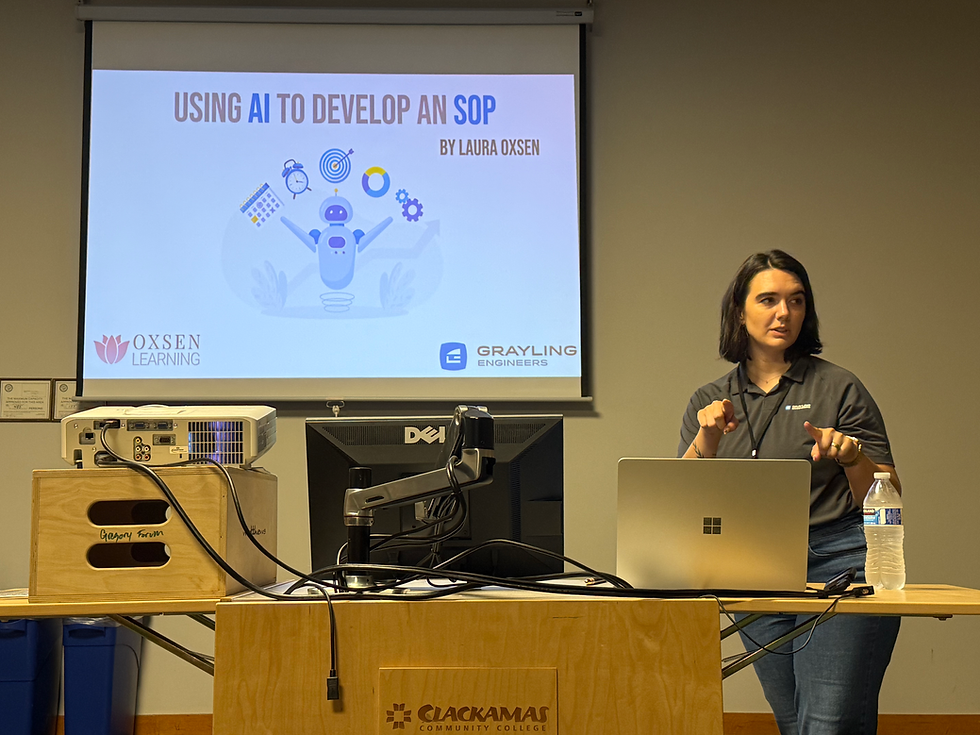
In July, I brought this idea to the Waterworks School, through the Northwest Oregon subsection of AWWA. The first part of the session covered some basic definitions. Then we got into the details. Cybersecurity, and what's safe to put into these tools. Critical thinking, using AI for speed, but always confirming what it gives you. Environmental impact, weighing what you're using it for against the cost. In the last ten minutes, I walked the room through a live example.
One conversation turned into a Standard Operating Procedure for a basic emergency response plan, a working draft in about ten minutes.
How it works:
Pair the person who knows the process with someone who's comfortable with the technology. Have a conversation the same way you'd walk a new hire through the steps.
Record the meeting and feed the transcript into the AI tool. Review and refine what comes back into an actual usable SOP.
There's a scoping mistake worth watching for when you write any SOP, with or without AI. Trying to cover every scenario in one document. I call it not diluting the deck. Focus on the high-value stuff first, with clear steps and enough direction that someone can figure out the next move without a hundred page manual. You can always build out the edge cases later.
If we can do this in ten minutes for one emergency response plan, imagine what's possible for the rest of your procedures.
Quick shout out to Waterworks School and the Northwest Oregon subsection of AWWA behind it, which helps fund scholarships for the next generation of water professionals.
Want to see it? Here's our ten minute starting point. Download the file below, or interact with the web app version right here on the page. Both are the same basic SOP we built live, and a real look at what these tools can actually do.

Comments